
The Mississippi Slugburger
 The Mississippi Slugburger is really easy to make.
And the closer you look at it, the more it starts to feel like a burger that should make perfect sense in Finland.
Simple. Hearty. No unnecessary ingredients. No room for vanity.
The slugburger is completely unpretentious. It isn’t trying to be a towering gourmet showpiece held together with a wooden stake. It is honest, practical food made to feed people without spending much money.
There’s something almost Finnish about that.
You could even make a case that the slugburger has a little sisu in it.
Its story begins in Corinth, Mississippi, around 1917, when John Weeks began selling small hamburgers made with ground beef stretched with inexpensive ingredients such as potato and flour. Later versions used other extenders, including soy grits, breadcrumbs, and cornmeal.
The idea was simple: use less meat, make the meat go farther, and keep the burger affordable.
That became especially useful during the lean years that followed.
These little burgers reportedly sold for a nickel, which also gives us the most commonly told explanation for the strange name. A “slug” was associated with a five-cent piece or a similarly sized token.
No slugs involved.
Probably worth mentioning.
The burger changed over the years. Today you’ll find versions made with beef, pork, or combinations of meat and filler depending on where you eat one.
And that already feels pretty Finnish.
But this is where I have to disappoint the marketing department at William’s Mill.
I’m not going to tell you to dump a bunch of seasoning into it.
The traditional slugburger is supposed to be simple.
Salt.
That’s about it.
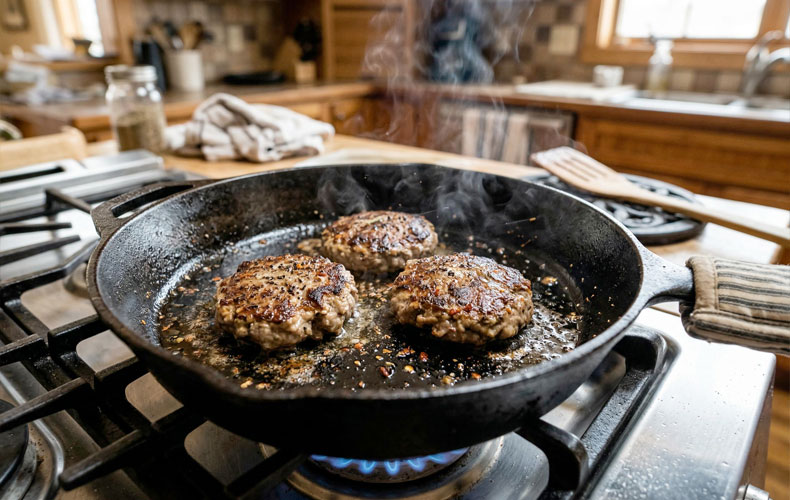
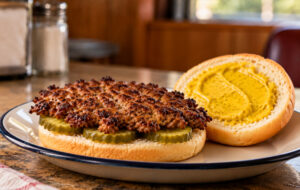
The patties are made thin and traditionally fried until the outside develops a dark, crispy crust. Put one on a small soft bun and add mustard, dill pickles, and usually onion.
That’s it.
No pile of toppings. No special burger sauce. No bacon jam. No twelve-euro artisanal brioche bun.
Meat. Filler. Salt. Mustard. Pickles. Onion.
And somehow, it works.
The outside gets crisp while the inside stays soft and rich. The mustard brings acidity, the pickles cut through the fat, and that plain little white bun catches everything underneath.
It isn’t fancy.
It was never supposed to be.
The Mississippi Slugburger has survived for more than a century because somebody figured out how to turn economic necessity into something people actually wanted to keep eating.
That tells you a lot more about American regional food than another pile of toppings ever could.
And it makes a pretty damn good burger.
— William S.